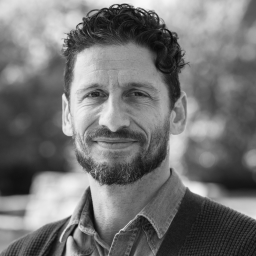
The story of Mike Finneran begins, as the best stories do, at the racetrack.
His parents were thoroughbred owners who spent their weekends at the races and brought young Mike along for the ride. One afternoon, they gave him his allowance and then asked him which horse to bet on, mouthing the words carefully so their deaf son could follow. He told them. They hit a daily double for $127. The next day, they walked into a sporting goods store and bought him a set of MacGregor clubs with the winnings.
Several years later, his parents asked what he wanted for his 14th birthday. He told them he wanted a golf lesson from a pro. To this day, he says it was one of the best investments he ever made.
He has never stopped swinging. And winning.
· · ·
This October, Mike Finneran — 78 years old, seven handicap, legs made of twigs, energy and color that make Robin Williams look pedestrian, and slightly heavier than a wet towel on a good day — will tee it up at his 1,000th golf course in Austin, Texas. He has invited every Deaf golfer who wants to be there. Of course, he has.
· · ·
The résumé first, because it earns what comes after.
Mike became fascinated with golf when his older Deaf sister took him by train to Greenwich to watch her close friend from St. Mary’s School for the Deaf compete in the U.S. Junior Girls Golf Championship. He came home a different kid. The horse-track clubs and the birthday lesson were already waiting to happen.
That summer after getting his first golf lesson, he played in his first Midwestern Deaf Golf Association tournament at 14. They raised the age limit to 17 the following year and asked him not to come back. His crime? Asking other golfers what they shot, and telling them, honestly, whether he did better.
He claims it was because he was young. But I think he was just being Irish.
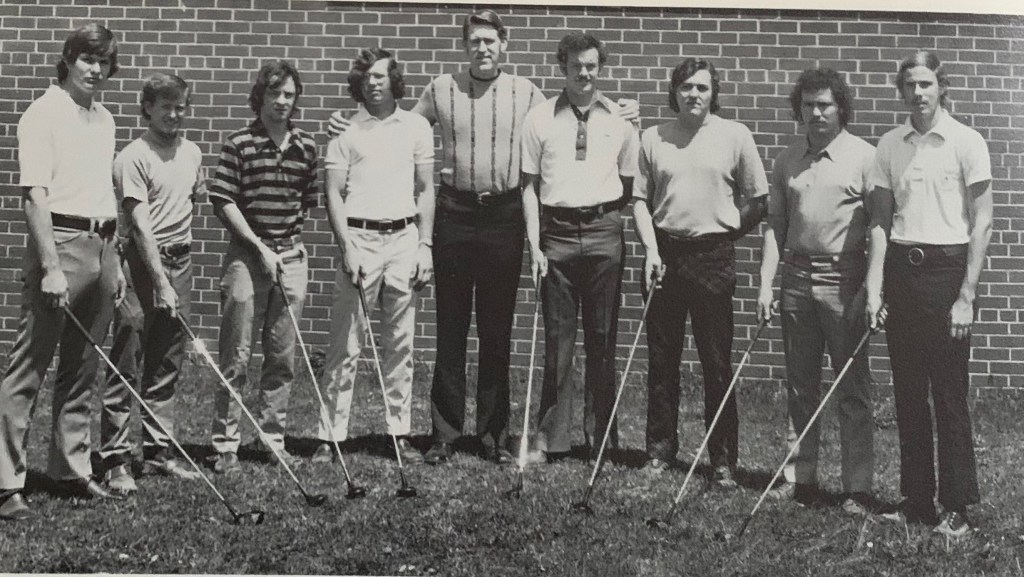
Since then, he has won more than 50 Deaf tournaments. He has made five hole-in-ones. He was a four-year captain of the Gallaudet University golf team. He’s played in forty states. (Condolences to the Dakotas for having never seen him golf.) And ten countries: Japan, Australia, Ireland, Spain, New Zealand, Denmark, Norway, Mexico, Canada, and the USA.
Now, about that swing.
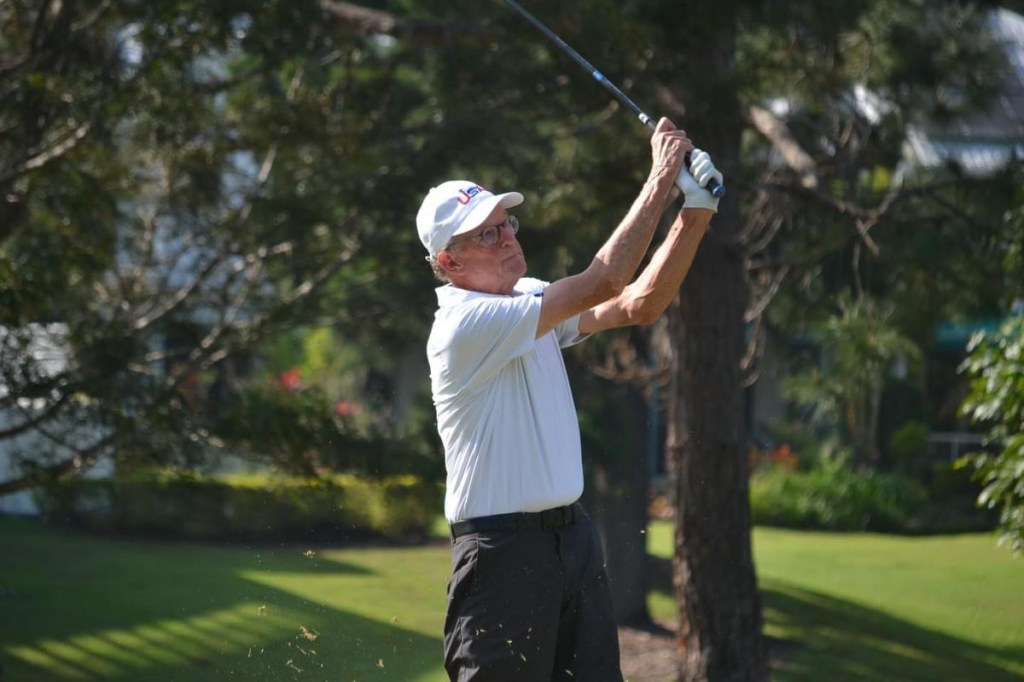
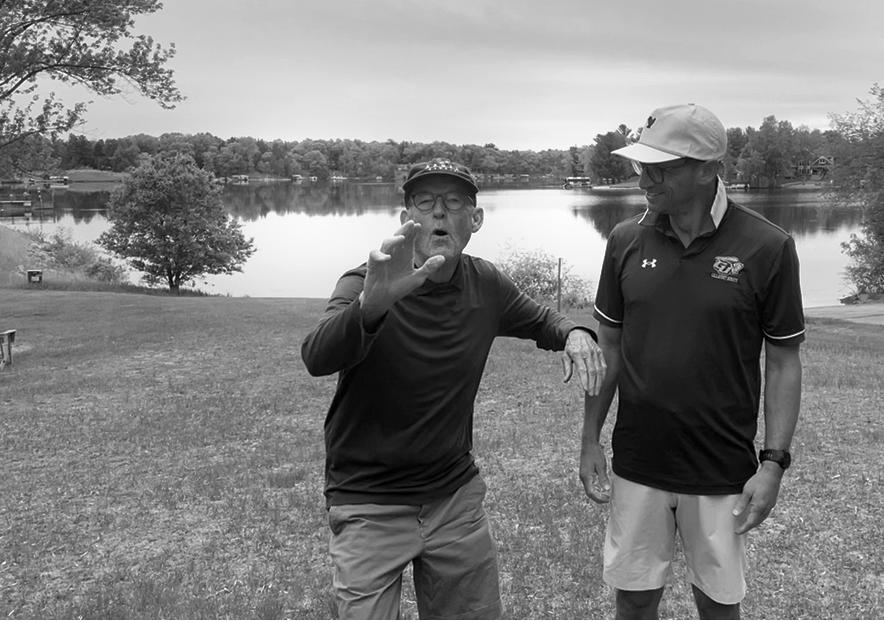
Mike Finneran’s full swing looks like a man trying to shake a rock out of his shoe mid-backswing. It should not work. It is not always long. But it’s always straight as an arrow. And when he gets within fifty yards of the green? He becomes someone else entirely.
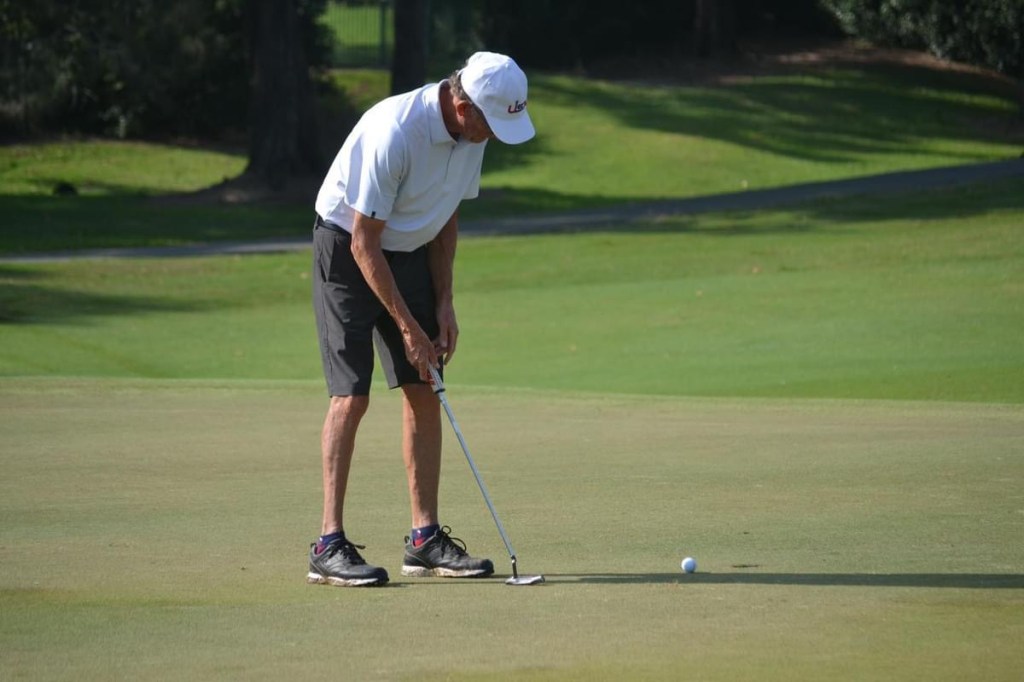
Watch him stand over a chip shot, and you will understand the two good things about obsession. It turns a lifetime of practice into instinct. And it makes you fearless when money is on the line. The legs might be like a flamingo at address. But they never move. They are planted like a man who has been standing over this shot for seventy years. The wedge waggles and waggles. The wrists get wristy. And then the ball goes where he wants it to go. It’s annoying because it costs you money. It’s also annoying because you get the sinking feeling that even if you played as often as he does, you still wouldn’t be able to chip that well.
He sends ASLized videos to our group text of golfing buddies — joking, holding court. There’s a difference between a video in ASL and an ASLized video. The former is like a text message that happens to be in English. The other is like a New Yorker essay, using everything the language has to offer — its grammar, its poetry, its expressive range. Mike makes the latter. He makes literature.
I delete most videos after 3 seconds. Watching takes longer than reading a text, demands your full attention like a hostage-taker, and punishes you for blinking. But his videos? I watch twice. Sometimes, three times. And often, I share them with my wife.
He can rub your face in your misery while making you laugh. Not everyone can do that. Almost no one can do it well. It’s not just his infectious energy. It’s how he signs. He has a sign like no other for “understand” that he calls “finnystand,” and when he spells out F-U-N with his teeth showing, you believe him.
After rounds, he sends videos. There is always a lesson. It is usually a warning against trying to overpower the ball. His sign for that siren call looks like a man possessed — tongue curled inside his lower lip with the face of someone trying to wrestle an alligator into submission. (It’s funny until you remind yourself you suffer from the same fatal temptation on every par 5.)
· · ·
Mike has given as much as he has taken from the game. For years, he has volunteered with the US Deaf Golf Association, providing free clinics to Deaf youth and supporting the U.S. Deaflympics golf team. He knows what golf gave him, and he pays it forward with the vitality he brings to everything else: the jokes, the jigs, the bets, the laughter that fills whatever fairway he happens to be standing in.
He taught me golf when I was a kid. Drill with a second ball behind you on the takeaway. Hit it straight back. I still hear him when I address the ball.
· · ·
As they say, golf is our therapy. It is also the reason we need therapy.
Golfers who watch Mike for the first time will probably think his secret to not needing therapy is his short game. But ask Sufi mystic Rumi, whom I have begun to read, and he’d have a different answer. He called obsession a divine madness, writing about lovers drowning in the sea of passion while intellectuals stand on the shore worrying about the water.
Mike has been underwater since 1961. He walks, signs, looks, laughs, and plays better than people half his age.
He shoots 72, 87, or 101 and says he had fun. Not as consolation. As a fact. In forty states and ten countries, at municipal courses that look like football fields without a groundskeeper and private clubs where they make you tuck in your shirt and change your shoes in the locker room, the verdict is always the same. He had fun. He always has fun.
· · ·
On golf trips with Mike, the drives are as good as the rounds. He makes you look forward to three hours in a car on the way to a faraway golf course in the middle of nowhere. He’s an extraordinary conversationalist who fills the miles with stories, opinions, and enough coffee to fuel a small village. And when we get to that bucket list golf course, I’m not sure whether to be excited about the upcoming round or disappointed that the uninterrupted conversation has to end.
I was on a golf trip in Wisconsin with Mike and two other wonderful golf buddies last summer, both of whom I had met through him. One considers Mike a surrogate father. Mike quietly helped to pay for the other’s golf school. We played five courses in five days: Lawsonia, Sand Valley, Trapper’s Turn, The Oaks, Lac La Belle. There was an elaborate betting game running the whole week, with even more side bets, money changing hands after every round, and Mike at the center of all of it, running commentary, keeping score, hustling everyone within range. What I remember most, though, is none of that.
What I remember is a Chick-fil-A, somewhere in nowhere, watching Mike destroy a two-ounce squeeze pouch of applesauce. One hundred percent all-natural blended apples, apple juice, and cinnamon. Because, of course, that’s what Mike puts in his body. He is the man who lectures Deaf senior citizens on clean eating, travels with bananas and health bars dripping with bone broth, and refuses to use a golf cart when his flamingo legs are available.
He destroyed that pouch with the enthusiasm of a man who had never once in his life been embarrassed about anything. He slurped. We videotaped. He slurped some more. Then he laughed like a kid who just made his first birdie. Or maybe like a kid who won $127 at the horse track. The rest of us laughed too, knowing how ridiculous he looked, and knowing he didn’t give a damn, which was exactly why we were there.
· · ·
In Austin this October, Mike Finneran will stand on a tee box at his 1,000th golf course. He will joke. He will jig. There will be bets. He will sign finnystand. He will try to overpower the golf ball at least once. And he will make a spinning chip for a tap-in par to rob my bank account. Deaf golfers who flew in from across the country will be by his side. He will swing. And whatever happens next — whatever number goes on the card — you already know what he’ll say.
He had F-U-N. He always does.
Rumi called it divine madness. Psychologists call it therapy. Mike just calls it golf.
 Brendan Stern
Leave a Reply