Two weeks ago, I had dinner with two childhood friends from the California School for the Deaf in Fremont and Gallaudet University. True to American custom, we talked about what keeps us busy from 8 to 5—and awake deep into the night. Both are successful entrepreneurs, and to that end, I’m a proud Kickstarter backer of Lost River Vacations, a fan of The ASL App, and a wearer of an ILY Kissfist t-shirt in gray frost.
On the drive home, I found myself reflecting. Never once growing up Deaf at a deaf school did I imagine that a startup launched by my K-12 classmate would be featured in The Washington Post. That my high school Academic Bowl teammate would become an Obama Fellow for her groundbreaking work in visual media and language access. That another K-12 classmate would be pursuing a Ph.D. in Computing and Information Sciences, and another in clinical psychology. That one would earn a law degree from UC-Hastings, another land a faculty post at UCLA.
Nor, enrolling at Gallaudet as an 18-year-old Government major, could I have pictured a future alum becoming the first and only person to win two reality TV shows and appear regularly in mainstream news. Or that a fellow major would serve as Receptionist of the United States under President Obama.
(And keep in mind, I’m talking only about select members of two classes from a residential deaf school totaling roughly 80 students, and from a tiny liberal arts university for the deaf ranked “less selective” by U.S. News and World Report.)
Nor could I have predicted that studying ASL would become more popular among college students than Arabic, Russian, and Hebrew combined. That a leading presidential candidate would post a viral video of himself signing. That the most visible member of the House of Representatives would quote Deaf people on social media. That cable’s most popular show would feature a recurring Deaf character. Or that, in the cases of Pete Buttigieg, Alexandria Ocasio-Cortez, and The Walking Dead, these wouldn’t be acts of charity but savvy political and cultural plays, capitalizing on the sacred status of ASL and Deaf culture.
Put simply, it’s now easier to imagine a Democratic presidential candidate thanking a Deaf supporter in ASL than a French-American in French. Easier to envision a Deaf-written, Deaf-produced, Deaf-acted TV series outperforming one created by and about Mormons. Why? Because Deaf people today hold more moral currency in our public culture, even if Francophones and Mormons wield far more economic power and political representation.
Looking back, the journey of the Deaf community is rich with social, intellectual, and political breakthroughs. In the 1970s, William Stokoe argued that our beautiful signs formed a full-fledged language governed by rules. In 1987, a Deaf actress won an Oscar for Best Actress, busting myths about what deaf people could achieve. In 1988, we demanded and got our first deaf university president, telling the world we could do anything but hear. In 1990, we gained legal access and reasonable accommodations in public spaces. In the 2000s, Twitter and Facebook handed megaphones—once reserved for spoken English—to Deaf people By the 2010s, Nyle Thompson became Nyle DiMarco.
Yet we rarely pause to celebrate how far we’ve come—or are still going. Instead, we’re more likely to literally ROAR that we are endangered victims under the thumb of oppressive forces. That we stand today at a crossroads threatening the very survival of ASL and Deaf culture, citing language deprivation, systemic audism, and the spread of cochlear implants, insisting that everything and everyone be perfect right now.
OTHERWISE, WE MUST BURN IT ALL DOWN!
What could explain this contrast between historic progress and tribal anxiety? I see three reasons (among many): (1) the reality of positionality, (2) the gap between individual and institutional success, and (3) the seductive pull of dogma.
As for the first: I attended a fascinating workshop last fall where the presenter observed that majority populations measure minority issues by how far we’ve come. Minority individuals, meanwhile, gauge progress by what still could and should be. Which makes sense.
Still, why must it be either/or? Why does aspiration cancel out honesty? Why should imperfection eclipse the good? The question of progress isn’t just political or positional—it’s an empirical matter. And interestingly, the numbers tell two stories, which brings us to the second explanation.
Yes, deaf individuals are thriving. Yes, ASL and Deaf culture are celebrated in public like never before. But how are the institutions that nurtured this success doing?
By nearly every metric, enrollment at schools for the Deaf and membership in deaf organizations are declining, facing severe demographic, economic, and political pressures with no sign of relief. Here, the pessimists in our community have a point.
We should wonder: would today’s unprecedented achievements by deaf people—and the moral capital we’ve amassed around ASL and Deaf culture—have been possible without the critical mass once found in our organizations and institutions during their formative years?
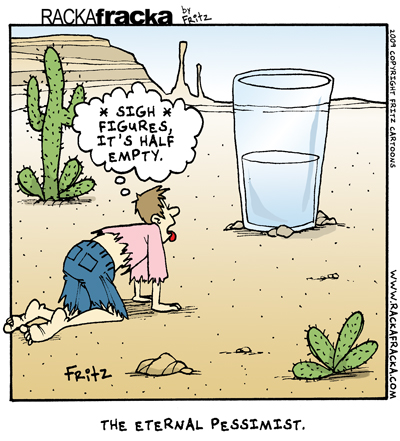
So what does this mean for us now? Should we toast our community’s progress and support imperfect-but-productive approaches? Or is that like lounging back to applaud a plastic straw ban on a perfect afternoon while climate scientists warn of looming catastrophe?
I suspect the real answer lies in rejecting this either/or fallacy. Can’t we acknowledge that we have more opportunities than when America was supposedly “great,” while still recognizing how much work remains?
To that end, I’ll keep wearing my ILY Kissfist t-shirt in gray frost on the way to a tiny home in Lost River this fall, reminding myself that these are the best and worst of times—an age of wisdom and foolishness, belief and incredulity, light and darkness, hope and despair.
And when I get there, I plan to reread “The Second Coming” by W.B. Yeats, to remember that pragmatism is nowhere near as intoxicating as passion, not just to the Deaf eye but to the human mind:
Turning and turning in the widening gyre
The falcon cannot hear the falconer;
Things fall apart; the centre cannot hold;
Mere anarchy is loosed upon the world,
The blood-dimmed tide is loosed, and everywhere
The ceremony of innocence is drowned;
The best lack all conviction, while the worst
Are full of passionate intensity.


 Brendan Stern
Leave a Reply